Sunday, October 05, 2008

South African company unveils electric car


A South African company, Optimal Energy, is unveiling Africa's first locally developed electric car.

The company says the car, expected on the market in 2010, will help reduce urban emissions and noise pollution.

The head of the firm denied that unreliable African power supplies would make it difficult to recharge the car.

Kobus Meiring told the BBC that users could recharge the lithium battery that powers the car overnight, when there is often excess energy supply.

An energy shortage in South Africa has caused power cuts, including one in January that shut down mines for five days.

"Consistency of electricity supply is an important thing," Mr Meiring told the BBC's Network Africa programme.

"But even in the current situation when it hasn't kept up properly, between 11 o'clock at night and six o'clock the next morning there are vast amounts of excess generated capacity available."

Solar panels

The car, called the Joule, can be recharged at home using a standard 220-volt home outlet and an on-board charger, according to Optimal Energy's website.

It can then drive for 400km (249 miles).

Mr Meiring said the car also had solar panels on its roof "which in a sunny place like South Africa would give you an boost of about 15km-20km after being in the sun all day".

The car has been designed in South Africa and more than 50% of it is expected to be manufactured in South Africa, he said.

Optimal Energy is unveiling the Joule at the Paris Motor Show.

The car is expected to be on the market in South Africa towards the end of 2010, and to be sold for export after that.

Friday, October 03, 2008

U.S Financial Bailout as compared to the Naija Bank Collapse

If you're like me and millions of "average joe six pack" your head is probably spinning like crazy about the ongoing U.S. financial crisis. Some of you might know the Naija banks faced a bank crisis some years back as well. Awa area boys, all of our savings just evaporated and the banks basically said "no worry...next time keep your money for mattras"

Well, me I no sabi this one O! so I reached out to an up and coming Financial guru to break it down in afriko terms. What the hell is going on with yankee and banks closing left and right? how is this similar to Naija's version? what does the future hold?

Here's his insight
=================================================================================

The U.S. Financial Crisis/credit crunch

For many years, financial institutions have found many ways to make money. The rise of derivative trading and securitization has lead to this financial mess. Basically, financial institutions bought or acquired millions or even billions of dollars worth of loans which were known as mortgage backed securities.

Now, many of these loans that make up these packages were known as sub-prime loans. The rise of sub-prime loans (lenders provide loans to individuals of firms deemed as “sub-prime” and have a higher rate of risk) lead to the rise of riskier packages. The rise in defaults or foreclosures lead to the rise in riskier packages. As people began to default on these loans, the loans became a burden to the balance sheets of many institutions. Look at it this way: you lend someone, who you know MAY not pay you back, money and then they indeed default on the loan. The loan that you now have is worthless or toxic as you may never get your money back. Now, multiply this by billions of dollars and thus, you have institutions that owned toxic assets that are currently very illiquid. As a result, banks are strapped for cash and are unable to raise any either. The key issue here is that banks do not have capital, or can not raise capital to meet their obligations and run their businesses.

Hence, the credit crunch of 2008!

The trickle down effect is also another issue because with a “credit freeze” or restrictive credit practices, many Americans, ordinary Americans will be affected. Small business may not be able to meet payroll, you may not be able to buy a car or get a student loan.

But you knew that and I now sound like a politician!

So, in summary: the mortgage back securities, owned by many wall-street banks, that were tied to sub-prime loans have caused a liquidity contraction, which, restricts the free flow of credit that serves as the cog in the engine of the American economy.

It is important to note that there are other “bad” or “toxic” assets out there as well. For example, credit-card debt.

The U.S. Bailout

This is a bill, that if passed, will assist various Wall Street banks and institutions by buying toxic assets known as mortgage-backed securities that are tied to sub-prime loans from them and freeing up their balance sheets.

What does this mean?

The core of the bill provides that the government will acquire, in stages, over $1 trillion worth of these mortgage-backed securities for $700 billion. Hence a “discount.” The idea is that the government, through its proxy, the FED, will be able to give the banks more room to operate and start releasing credit which stimulates the economy. The FED also hopes to be able to sell these securities at some point in the future, hopefully for a profit.


Key Provisions:


The bill includes a stipulation that the Treasury set up an insurance program - to be funded with risk-based premiums paid by the industry - to guarantee companies' troubled assets, including mortgage-backed securities, purchased before March 14, 2008.

The bill also provides that the FDIC will temporarily increase the insurance on individual bank accounts from $100,000 to $250,000.

Another provision of the bill is to provide tax payers, ostensibly through the FED, to acquire equity in any of these financial institutions that participates in the bailout plan.

The establishment of two oversight committees.

The Nigerian Finance House Crisis in the 1990s

This crisis was actually quite comical when I think about it, especially since I now have a Smith MBA. Anyway, it was one precipitated by greed and ignorance. My understanding of what happened was that you had institutions, in a heavy deregulated industry, springing up all over the place. Unqualified individuals began to open these "Finance Houses" which differ from conventional banks and can be described as investment vehicles. Outlandish promises on returns were made through conniving and criminal individuals whose sole purpose of these schemes was to get investor money and scram. People lined up to invest their life savings on promises that they would receive astronomical returns.

News Flash people- If it sounds too good to be true, it probably is! Even during the recent glory days of the Nigerian Stock Exchange, these types of returns were unheard of.

It is important to stress that this crisis was one which was "man-made" and not one caused by free-markets. People simply invested money with incompetent individuals or criminals. To come full circle, this was a crisis of the greedy and the ignorant.


http://www.reuters.com/article/rbssFinancialServicesAndRealEstateNews/idUSLU22546420080930

AUTHOR:
Thandi MBA, Future Commodities Trader Millionaire (in naira)


A vilf side note

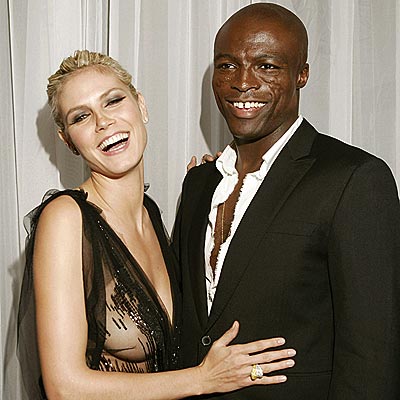
Salute to a Couple of "Lucky" African Men

Pictures are worth...


Can A Sista Rock A Mic? Festival (CASRAM 08) begins WEDNESDAY!

(click on image for a larger view)
4th Annual Can A Sista Rock A Mic? Festival(CASRAM 08)
Wednesday Oct 8 thru Saturday Oct 11

African Woman Fit Win Project Runway?

It was close, but Korto of Project Runway lives to sew another day. Do you think she has a chance of winning it all?


Originally from Liberia

BIO

Canada to attend fashion school. After school, she moved outside of Little Rock, Arkansas, where she now resides with her husband and daughter. Drawing from her African roots, Korto infuses tribal details into her classic designs. She is inspired by rich fabrics and textures and says her designs are intended for real, full-figured women. In her spare time, Korto works as a freelance fashion photographer, dances in an African dance troupe and does African hair braiding and makeup. She says her family considers her to be fun and easygoing.

SOURCE: Project Runway

One of her designs

Wednesday, October 01, 2008

Don't Vote - Na Reverse Psychology O!

Love is Wicked

Sexy? Party? ...in the meantime

Happy Birthday Naija

Waka waka...everyday na waka waka


Laiye green white green

Naija you are not getting any younger O! you are 48 very soon, you go dey push 50. A fool at 40 na one thing, but a fool at 50. It's time to get your [explicative] together. Baba Yar'Dua, it get as it be O! I beg represent.

There are however, some bright spots to Nigeria today...will post as soon as I find them.

Monday, September 29, 2008

African Comedy British Style - Part 2

by popular demand

The Pentagon's new Africa command - Africom

Have you heard of this?


Check out http://www.africom.mil/ for more information

In the mean time:-

HEADLINE:- The Pentagon's new Africa command raises suspicions about U.S. motives

The U.S. Africa Command, the Pentagon's first effort to unite its counterterrorism, training and humanitarian operations on the continent, launches Wednesday amid questions at home about its mission and deep suspicions in Africa about its intentions.

U.S. officials have billed the new command, known as Africom, as a sign of Africa's strategic importance, but many in Africa see it as an unwelcome expansion of the U.S.-led war on terrorism and a bid to secure greater access to the continent's vast oil resources. Several countries have refused to host the command, and officials say Africom will be based in Stuttgart, Germany , for the foreseeable future.

U.S.-based aid groups and some in Congress have expressed worries that Africom will tilt U.S policy in Africa away from democracy-building and economic development and toward security objectives such as stemming the growth of militant Islamist groups in Somalia and North Africa , some of which have ties to al Qaida .

U.S. covert operations in Somalia and elsewhere have fueled the controversy. In late 2006, the U.S. military provided intelligence to help Ethiopia topple a fundamentalist Islamic regime in Somalia , an invasion that's fueled a violent Islamist insurgency.

U.S. forces have since launched several strikes on suspected terrorist targets in Somalia . While one of the strikes killed a top militant commander, Aden Hashi Ayro , in May, Somalis say the attacks also killed and badly wounded civilians.

Underlining the skepticism in Washington , the House of Representatives voted last week to provide $266 million to fund Africom's first year of operations — $123 million less than President Bush had requested. The House Appropriations Committee said the reduction was due partly to "the failure to establish an Africom presence on the continent."

The fledgling command's image problem, at home and abroad, is cause for concern because of Africa's growing importance to the United States .

The Department of Energy says that 17 percent of U.S. crude oil imports now come from Africa , more than the U.S. gets from Persian Gulf countries. But rising powers such as China have strengthened their ties with Africa and become a powerful counterweight to American influence.

Pentagon officials reject claims that Africom is about oil or China , but those perceptions remain strong in Africa .

"Obviously the U.S. is concerned about China's influence, security, oil, counterterrorism, hunting down al Qaida suspects," said Erin Weir of Refugees International , a Washington -based advocacy group that's opposed Africom. "Africans read the newspaper just the same as we do, and they know what drives U.S. interests now."

Witney Schneidman , who served as deputy assistant Secretary of State for African Affairs in the Clinton administration, said: "In many parts of Africa it is perceived as the U.S. bringing its war on terror to Africa . That is not what Africom is about, but that is how it has been seen."

While the public face of the U.S. military in Africa has been that of a benign partner, human rights activists say that the Bush administration's focus on terrorism has fueled suspicion of Africom.

"Anything to do with the U.S. military evokes some level of anxiety," said Hassan Omar , a member of the independent Kenya National Commission on Human Rights . "There is a strong feeling that America would overlook a crisis within a government or violations by certain governments if only they could secure more cooperation on matters of security."

After Bush announced the creation of Africom in February 2007 , the Pentagon began issuing mixed messages about its mission, with some officials suggesting that the new command would help "coordinate" U.S. policy in the region. Experts immediately questioned whether U.S. troops would participate in humanitarian programs and other non-combat operations that have long been run by the State Department and U.S. embassies.

Pentagon officials have acknowledged mistakes in marketing Africom, and they no longer list humanitarian projects as part of its mission. Instead, they say that Africom will support other U.S. government agencies and focus on helping bolster African militaries.

"Africom will support, not shape, U.S. foreign policy on the continent," Teresa Whelan , Deputy Assistant Secretary of Defense for African Affairs, told a congressional hearing in July.

About 1,300 people, divided roughly evenly between civilian and military positions, are expected to staff the Germany headquarters, but no additional soldiers will be deployed in Africa yet. Instead, Africom will take charge of small U.S. military teams that are already on the continent training national militaries and maritime agencies, providing immunizations, drilling wells, rebuilding schools and conducting other projects.

Africom will assume control over the largest U.S. military base in the region, the 1,500-strong Combined Joint Task Force-Horn of Africa, housed at a former French Foreign Legion facility in the tiny eastern nation of Djibouti .

Despite the questions about its mission, experts say that Africom will raise Africa's profile in the Pentagon . Currently, three separate regional "combatant commands," which manage overseas U.S. military operations, share responsibility for Africa . The U.S. Central Command oversees seven countries in East Africa , Pacific Command has three Indian Ocean island nations and European Command handles 42 other African countries from Morocco to South Africa .

Now all the countries — except Egypt , which will continue to be grouped with Middle Eastern nations under the Central Command — will fall under Africom's jurisdiction. As with the other regional commands, Africom's commander, four-star Army Gen. William E. "Kip" Ward , reports to Secretary of Defense Robert Gates .

"One of the basic problems of U.S. engagement with Africa historically is there's been a lack of a long-term, sustained and steady commitment," said Abiodun Williams , a Sierra Leonean who's vice president of the Center for Conflict Analysis and Prevention at the United States Institute of Peace in Washington . "One of the positive things about Africom is this might finally be changing."

SOURCE: Yahoo News

Dose of Afriko Cartoon

Enjoy...


Artist: Kaycee

Sunday, September 28, 2008

Miss World 2008 in South Africa

It appears all the fun stuff is happening in South Africa. The World Cup is going to be there in 2010, Chris Rock added South Africa on his comedy world tour which is now playing on HBO, now they have the Miss World 2008 Competition.

It get as it be O!


Log on to http://www.globalbeauties.com/ for more details

Somali Pirates?!?!


U.S. targets Somali pirates

The U.S. and international military forces are taking more aggressive action off the African coast as bolder and more violent pirates imperil oil shipments and other trade.

The area is a key shipping route for cargo transported to and from the U.S. and elsewhere. In response to pirate attacks, the U.S. has stepped up its patrols to deter them and sometimes intervened to rescue hostages and ships. It also has increased its intelligence-sharing in the area, says Navy Lt. Nate Christensen, a spokesman for the 5th Fleet in Bahrain, which patrols Middle Eastern and African waters.

The U.S. is "very concerned about the increasing number of acts of piracy and armed robbery" off the Somali coast, he says. Somalia's weak government has admitted it can't control its territorial waters, and Nigeria is fending off a rebel group.

A U.N. Security Council resolution, pushed by the U.S. and passed June 2, allows the U.S. and its coalition allies to intervene by "all necessary means" for the next six months to stop piracy off the Somali coast. Coalition ships have since scared off pirates in at least two attacks, says the London-based International Maritime Bureau.

African coastlines have surpassed Asian shipping lanes as the most dangerous in the world. Hijackings and hostage takings are increasing off the coasts of Somalia in the east and Nigeria in the west. The Asian straits, particularly Indonesia, held the top spot for most of the past decade.
FIND MORE STORIES IN: United States | Japan | United Nations | Africa | Asia | New York | Indonesia | Singapore | Somalia | Coast Guard | Middle Eastern | Bahrain | Tanzania | World Food Program | Rand Corp | Nigeria | Fleet | Gulf of Aden | Malacca Strait | Strait of Malacca | Adm. Timothy Keating | Cyrus Mody | Peter Chalk | Vice Adm. Doug Crowder

Armed attacks on cargo ships, oil tankers and cruise ships are estimated to cost more than $1 billion a year, says Peter Chalk, a senior security analyst at RAND Corp. "Piracy does affect U.S. commerce. It is to the economic interest of the United States that the sea lanes are as stable as possible," Chalk says.

Piracy in Nigeria is leading to a drop in oil shipments because shipping companies are reluctant to risk ships, cargos and crew, he says. "That has implications for U.S. strategic energy supplies."

African waters account for 56% of all pirate attacks, spiking from 27 attacks in the first half of 2005 to 64 attacks since January. Meanwhile, pirate attacks elsewhere are dropping, reports the Piracy Reporting Center, a Malaysian-based group that monitors attacks for the bureau.

The attacks are more violent than in Asia, says bureau manager Cyrus Mody. Pirates near Somalia, the Gulf of Aden, Nigeria and Tanzania took 172 hostages in the first half of the year.

Somali pirates armed with automatic weapons and rocket-propelled grenades regularly hijack ships and hold crews for ransom.

The Lourdes Tide, a supply ship working for a U.S. company, was attacked in Nigeria on May 13 by armed pirates who demanded a ransom. Pirates released the vessel and 11-person crew June 16.

The United Nations' World Food Program has requested military escorts to get its ships carrying 32,000 tons of food each month into Somalia, where civil strife and drought have worsened the food crisis. A Dutch frigate ended its escort mission in June, says Peter Smerdon, the group's spokesman in Africa.

Ships alter course by hundreds of miles and expend as much as a day's supply of fuel to avoid Somali pirates, says Michael Livanos, president of Scio Shipping, based in New York. "The costs are gigantic," he says.

The bold pirate attacks along the African coast come as attacks decline in a key Asian shipping lane.

The U.S. military says it donated equipment, coordinated joint training exercises and nudged Indonesia to cooperate with its two maritime neighbors, Singapore and Malaysia. It wanted the three countries to get control of the Strait of Malacca, an important waterway for oil shipments, cargo and cruise ships.

"It's as critical a chunk of water as exists anywhere in the world," says Adm. Timothy Keating, commander of the U.S. Pacific Command.

Their efforts seem to be working. Ships sailing near Indonesia reported 13 attacks between Jan. 1 and June 30, down from 64 in the first six months of 2003 — an 80% drop, according to the Maritime Bureau's half-yearly report. Ships reported two attacks in the Malacca Strait so far this year.

The U.S. bolstered Indonesia's Coast Guard and Navy with 15 high-speed patrol boats and seven radar units. It trained with navies from all three countries and persuaded them to share intelligence about ships passing through international and territorial waters. Malaysia coordinated a joint air patrol with neighboring countries to surveil the waterway.

"If it wasn't safe to bring cargo through the Strait of Malacca, the U.S. Navy would go there and make it safe," says Vice Adm. Doug Crowder, who commands the U.S. 7th Fleet, based in Japan. Crowder says the cooperation now makes that unnecessary.

That same formula is unlikely to work in Africa. "If you were to try to call the leader of Somalia and ask to come for a visit, who do you call?" Keating says.

SOURCE: USA TODAY

Friday, September 26, 2008

South Africa Picks New President


JOHANNESBURG — Kgalema Motlanthe, 59, a former trade unionist once imprisoned during the apartheid era on charges of terrorism, was overwhelmingly elected Thursday by Parliament as South Africa’s president.

But whether he merely keeps the seat warm until elections next year — when Jacob Zuma, his party’s leader, presumably will take over — depends on whether Mr. Zuma, 66, can continue to skirt the corruption charges that have long followed him.

Two weeks ago, a High Court judge not only threw out those charges on procedural grounds, but also implied that President Thabo Mbeki and his cabinet had meddled in the case. The opinion led the hierarchy of the governing African National Congress to demand that Mr. Mbeki step down, leading to the quick ascension of Mr. Motlanthe (pronounced moht-LAH-tay) as an interim president.

The judge’s action, however, has been appealed by the National Prosecuting Authority. If the appeal succeeds, or if the charges against Mr. Zuma are simply filed again after the procedural mistakes are corrected, party elders could view Mr. Motlanthe as an ace in the hole rather than as a caretaker.

The A.N.C. dominates the political landscape here. In the last national elections, in 2004, it won nearly 70 percent of the votes.

But Robert B. Mattes, the director of social science research at the University of Cape Town, said that an ever-larger portion of the population had grown disenchanted with the party since the days of Nelson Mandela.

“This is reflected in a 30-point decline in voter turnout between 1994 and 2004,” he said. “Black voters unhappy with the A.N.C. simply stay at home rather than switch their allegiance to an opposition party.”

Cynics here suggest that the entire reason for sidelining Mr. Mbeki was to make sure that Mr. Zuma’s legal problems disappeared.

Mr. Mbeki is suspected of suspending Vusi Pikoli, the leader of the National Prosecuting Authority, last year to stop the intended prosecution of a political ally, Police Commissioner Jackie Selebi. To some in the A.N.C., a similar dismissal now to protect Mr. Zuma might seem a practicable tactic.

But such a strategy would also seem venal — and Mr. Zuma has already been buffeted by years of accusations. In 2005, his financial adviser was convicted of brokering bribes Mr. Zuma’s way, which led to the corruption case.

In 2006, Mr. Zuma was acquitted on charges of raping a 31-year-old family friend. He testified that the woman had courted sex by sitting provocatively, and his Zulu upbringing had left him no choice but to oblige her.

Mr. Motlanthe is as reserved as Mr. Zuma is gregarious. The new president is not well known to many South Africans, though he is a familiar figure in the party He spent 10 years imprisoned on Robben Island. He became active in the labor movement as an officer with the miners. He was the A.N.C.’s secretary general from 1997 to 2007.

After being sworn in on Thursday in Cape Town, Mr. Motlanthe promised to keep South Africa on much the same path Mr. Mbeki had followed. “Mine is not a desire to deviate from what is working,” he said.

He announced the reappointment of the finance minister, Trevor Manuel, who is credited with keeping the nation’s economy at a hum. He announced one major change, however. Manto Tshabalala-Msimang has been given a new position as a minister in the presidency. In her previous job, health minister, she became a polarizing figure for espousing beetroot, garlic and lemon as a cure for AIDS. The new minister of health will be Barbara Hogan, a senior A.N.C. member of Parliament who is viewed as a welcome choice by groups that campaign for the distribution of antiretroviral medications.

Zackie Achmat, an anti-AIDS advocate, told a South African television reporter, “It’s a great day.”

SOURCE: New York Times; Alan Cowell reported from Paris.

Monday, September 22, 2008

Nigerians Look to Purchase English Soccer Team


Nigerian consortium shows interest in Newcastle

A consortium of wealthy Nigerians are planning to take over Newcastle United, according to reports in Africa.

Current owner Mike Ashley is trying to find a buyer for the ailing Premier League club, after proving unsuccessful with his initial efforts to secure a sale and Ashley has announced he wants to sell his interest in Newcastle just 16 months after staging a £134.4million takeover.

However, a Nigerian company claim they have £350million behind them - and are bidding to secure the remaining funding which would improve their chances of a successful takeover.

Chief Executive Officer of the NVA Management, Chris Nathaniel, whose company are handling the deal, wants to make Nigeria the first African country to own a Premier League club.

He told the KickOffNigeria website: ''All along I have been working hard to get wealthy and football loving Nigerian entrepreneurs to buy the club since Mike Ashley indicated his willingness to sell the club to the person, people or entrepreneurs who can meet the £400million selling price of the club.

''Right now I am happy to tell you that well meaning Nigerians have responded and the consortium of Nigerian entrepreneurs has so far contributed £350million to buy the club.

''Ashley has stood his ground that he won't sell the club until the money is raised to the asking price of £400million.

''So what that means is that we need to raise another £50million or £100million to shut the door behind the other top Arab companies who are also interested in the club.

''The Arab companies have also indicated interest and made offers - but they haven't met the asking price too.''

NVA handle Rio Ferdinand's PR and commercial interests and also arranged the pre-World Cup friendly between England and Croatia at Old Trafford in 2006. They further name Premier League wingers Wayne Routledge and Julian Gray amongst their other clients.

SOURCE: ESPN

Sunday, September 21, 2008

Why Kenyan women crave stones


Nancy Akoth is four months pregnant and like many women in her state has strange cravings.

Some women eat coal, gherkins or soap but Mrs Akoth craves soft stones, known in Kenya, where she lives, as "odowa".

"I just have this urge to eat these stones. I do very crazy things, I would even wake up at night and go looking for them," she told the BBC.

"I consulted my doctor and all he told me is that maybe I'm lacking iron and gave me medication on iron, but I still have the urge to eat those stones."

Luckily for Mrs Akoth, she is not alone in craving stones and they are easily found on sale in Nairobi's sprawling Gikomba market.

Among the fish-mongers and dealers in second-hand goods who flock to the market are traders who specialise in odowa.

Stone-seller Stephen Ndirangu unsurprisingly says women are his main customers.

"Most of them buy the stones to go and sell them to women who are pregnant," Mr Ndirangu says.

He says he sells one 90kg sack for about $6.

'Pleasant taste'

Although they are stones, they are too soft to break the teeth of Mrs Akoth and her fellow cravers.

Nutritionist Alice Ndong says the stones have a bland taste.

"It's a pleasant taste. It doesn't have a tangy flavour or a salty or a sugary flavour. It's a bit like eating flour," she told the BBC.


She says that because of their abrasive nature, the stones actually clean the teeth as the stone is chewed and the finer particles pass through the mouth.

However, she warns this should not be used as an excuse to eat the stones as the habit can also have harmful consequences.

"If somebody eats those stones and they don't take enough water, then they will actually get severe constipation… It can actually be very dangerous," she says.

"It can actually cause things like kidney damage and liver damage, if you don't take enough fluid because it will form a mass that cannot be excreted."

"When you eat these stones, it's like eating metal. The particles - because it's not food - are not digested as finely as fruits or vegetables," she says.

'Irresistible'

The phenomenon of craving non-food items like soil or soft stones is referred to as pica, a Latin word for magpie, the bird notorious for eating almost anything.

Researchers from the University of Nigeria interviewed 1,071 pregnant women attending a prenatal clinic at the Pumwani Maternity Hospital in Nairobi.

At least 800 of those interviewed said they ate soil, stones and other non-food items during their pregnancy.

But it is not only those who are pregnant who indulge in this habit.

Sylvia Moi still finds the soft stones irresistible, 14 years after she gave birth.

"I cannot do without it... Walking without it makes me feel bad, as if I'm lacking something [or] I'm hungry," Mrs Moi says.

She says she would like to quit the habit but just cannot stop herself.

"When you eat it you look awkward, people think: 'What is it that you lack in you that makes you eat that awkward stone,'" she says.

Infection

Experts say that the craving to eat odowa is largely due to a deficiency of vital minerals, like calcium, in the body.

"Unfortunately, these stones don't offer a lot of calcium. They offer some other forms of minerals like magnesium but not much calcium," says Mrs Ndong.

Research shows that these habits have negative side-effects on the women's health, ranging from parasitic infestations, anaemia and intestinal complications

"The problem with these stones is sometimes they're not hygienic. I remember up-country I've seen people just go somewhere, dig up and maybe people urinate in that spot," she says.

Experts warn pregnant women and others who enjoy eating odowa to try to ignore these cravings for the sake of their health.

The researchers say that the women are better off eating a balanced diet, than remaining hooked to the myth that their changing bodies need soft stones and soil.

SOURCE: BBC Africa

Tuesday, September 16, 2008

Ghana - Veeda & Nixon - Bribi Yaaye

This music video was suggested for your review..."cough" "cough" WHAT!

Jolie and Pitt give over 1 million pounds for Ethiopia kids


LOS ANGELES (Reuters) - Angelina Jolie and partner Brad Pitt have donated $2 million (1.12 million pounds) to create a centre, named after their adopted daughter, Zahara, for Ethiopian children affected by AIDS and tuberculosis.

The Global Health Committee said the donation from the Jolie-Pitt Foundation would establish a centre in the Ethiopian capital Addis Ababa to treat AIDS orphans and develop a program to treat drug-resistant tuberculosis.

The Oscar-winning Jolie adopted a baby girl she called Zahara, now 3 years old, from Ethiopia in July 2005 and the new clinic will be named after her.

"It is our hope that when Zahara is older, she will take responsibility for the clinic and continue its mission," Pitt said in a statement.

Pitt and Jolie now have six children -- twins Knox Leon and Vivienne Marcheline born in July, Shiloh, 2, and adopted children Zahara, Pax from Vietnam and Maddox from Cambodia.

The Jolie-Pitt Foundation helped set up a similar clinic in 2006 in Phnom Penh, Cambodia that is named after Maddox.

"Our goal is to transfer the success we have had in Cambodia to Ethiopia where people are needlessly dying of tuberculosis, a curable disease, and HIV/AIDS, a treatable disease," Jolie said.

Ethiopia has the seventh-highest rate of tuberculosis disease in the world and an estimated 1.7 million people in the country are infected with HIV, according to the World Health Organization. UNICEF estimates that more than 900,000 children have been orphaned by AIDS in Ethiopia.

SOURCE: Reuters (Reporting by Jill Serjeant, Editing by Bob Tourtellotte)

Saturday, September 13, 2008

Being A Single, Ambitious African Female


Image courtesy of uniteedesign.com / betterdetroityouth.org


Nigerian writer and recording artist, Olushola Dada, 29, tells the BBC's Africa Have Your Say programme what it is like being single, ambitious and female in Africa and if society's view on marriage is changing.

The pressure starts when you turn 25.

No-one will say you are a failure because you are not married yet but the pressure does begin.

You have graduated from university and then everyone naturally expects you to get married and settle down.

People wonder about the individuals that you spend time with and whether or not they may be 'the one'.

Even when you go to church: it is taken as given that church is a good place to meet a suitable husband. Everyone starts checking if someone notices you, finds you interesting.

Everyone even says prayers for you to be married.

You haven't made it

And so the pressure grows. And then the more successful you become, the more society frowns.


AFRICA HAVE YOUR SAY
Today's African woman have generally lost touch and lack the character of submission to live with a man
Macaulay Akinbami, Lagos

Is it good to be single?

Society looks at you, and it doesn't matter how successful you may be - if you have your own house, a car, how much you earn...

If you don't have a husband, then within the community, you haven't made it.

I have always been someone who believes that you do not have to get married for the sake of it and I do not put myself under pressure.

Yes, I do want to marry one day; and yes, I definitely want to have children.

But I do not see getting married as an achievement.

Anxiety

I see it as a life choice - something that you accept if it comes to you and enriches your life.

If it comes to you but lessens you - puts you in a box or takes something away from you, then you should not take it.

Most of my girlfriends, though, the ones who are my age or older, do not have the same attitude as me - most of my single friends are anxious to get married.

Unlike me.

The thing is though, here in Nigeria, every woman is brought up in a traditional manner. Even if you go through social studies school text books you will see how the roles of men and women are outlined:

The father must be greeted in the morning, father gives you money... and the mother cooks, the mother nurses the baby, the mother cleans.

More free

So you are almost trained to take up that role.

If you are a woman, you must feel privileged to be educated but then after that you must wed and 'build' a home.

I think that this is quite standard for most parts of the world where there are strong spiritual and cultural influences.

Although I have never travelled out of Nigeria, I get the idea that women in some other parts of the world are more free.

Women should not have to place marriage before their life. Women have to learn to be individuals first.

Like men. A man will get married and make sure it works for him - I hear Nigerian men saying how they must get married so they can have someone to wash for them, clean for them, cook for them, etc.

Conscious choice

They have the attitude that marriage will make their life easier. So should we as women. Otherwise it is not worth it.

I feel woman have to make a conscious choice to break away and be their own individual.

Maybe it is because of my own personal experience with my parents. In particular, from observing my mum:

She gave her whole life to her marriage and today she has a lot of unfulfilled dreams.

I do not think she feels it was worth it; and that has definitely affected me. If marriage is going to fulfil my life and add to it in a way that nothing else can then sure, I will have it.

But if not, no.

So far, I have not found that my career has suffered because of my views but that might be because of the sector I work in. I can imagine there are lots of women in other lines of work that do.

But that it is up to the individual too.

It is my life and I am not going to give up my dreams.

SOURCE: BBC Africa